Freezing surface
Rolled ice cream freezes as a thin layer on a flat cold plate.
LEARN / DEFINITION
A clear guide to the cold-plate method, alternate names, texture, equipment, and what separates rolled ice cream from churned frozen desserts.
Editorial review updated July 31, 2026
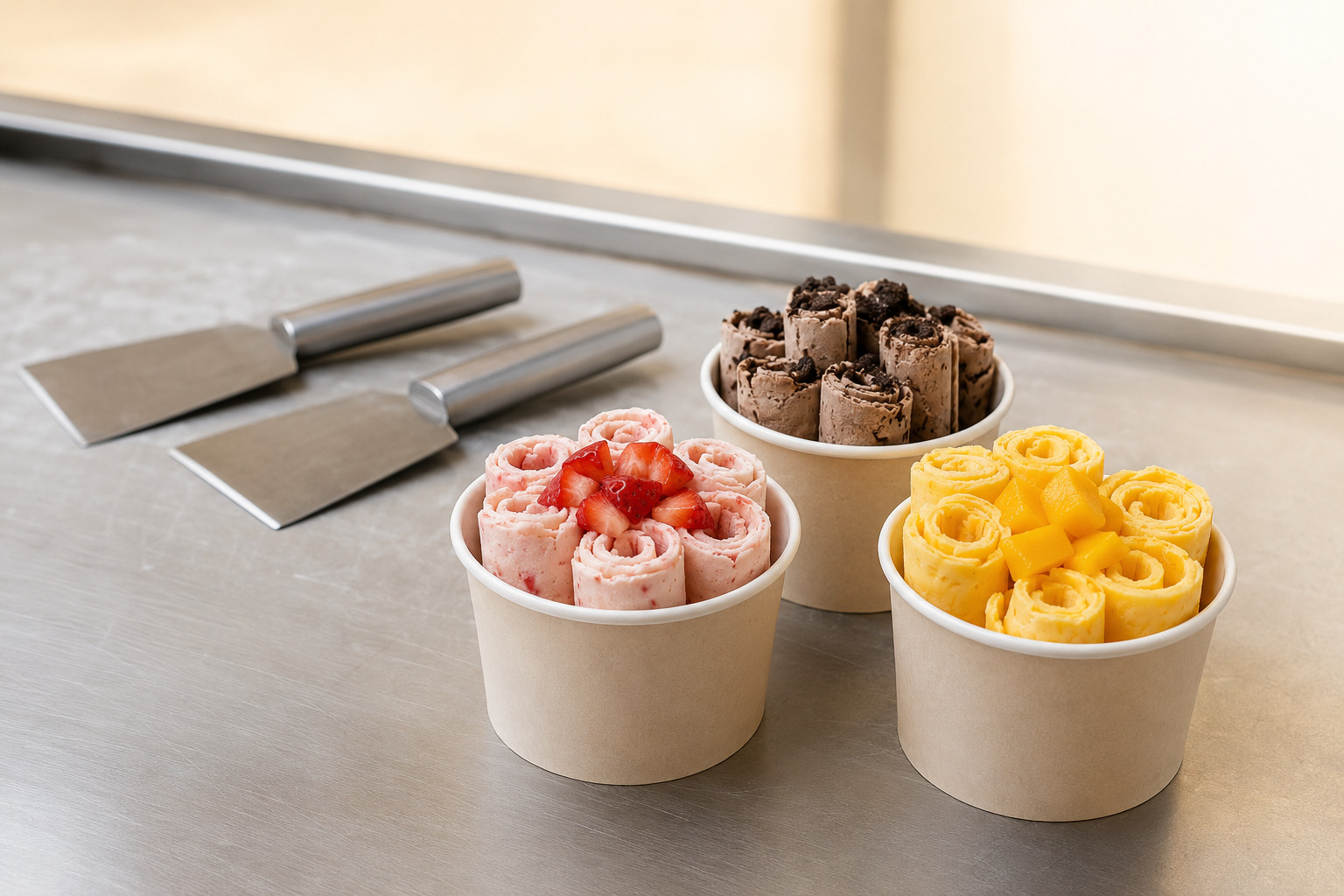
You may see Thai rolled ice cream, ice cream rolls, stir-fried ice cream, or roll ice cream. Naming is not proof that every recipe, ingredient, or preparation is identical.
The dessert is widely associated with Thailand and became internationally visible through street-food videos and shop concepts. Exact “first inventor” claims are often repeated without primary documentation, so this site does not present a single disputed origin story as settled fact.
Rolled ice cream freezes as a thin layer on a flat cold plate.
Churned ice cream freezes while a dasher continuously moves the mixture.
Rolled ice cream is commonly prepared to order and served immediately.
Home methods prioritize accessibility and small batches. Commercial systems prioritize recovery, repeat service, sanitation, operator workflow, and equipment compliance. Learn the home method or inspect commercial buying criteria.