Occasional Home Use
Start with a metal pan or passive freezer tray. The tradeoff is limited working time.
THE INDEPENDENT ROLLED ICE CREAM RESOURCE
RolledIceCream.net helps home creators, dessert lovers, machine buyers, and business operators understand the entire process—from the first pour to the final sale.
Planning a rolled ice cream business? Start here →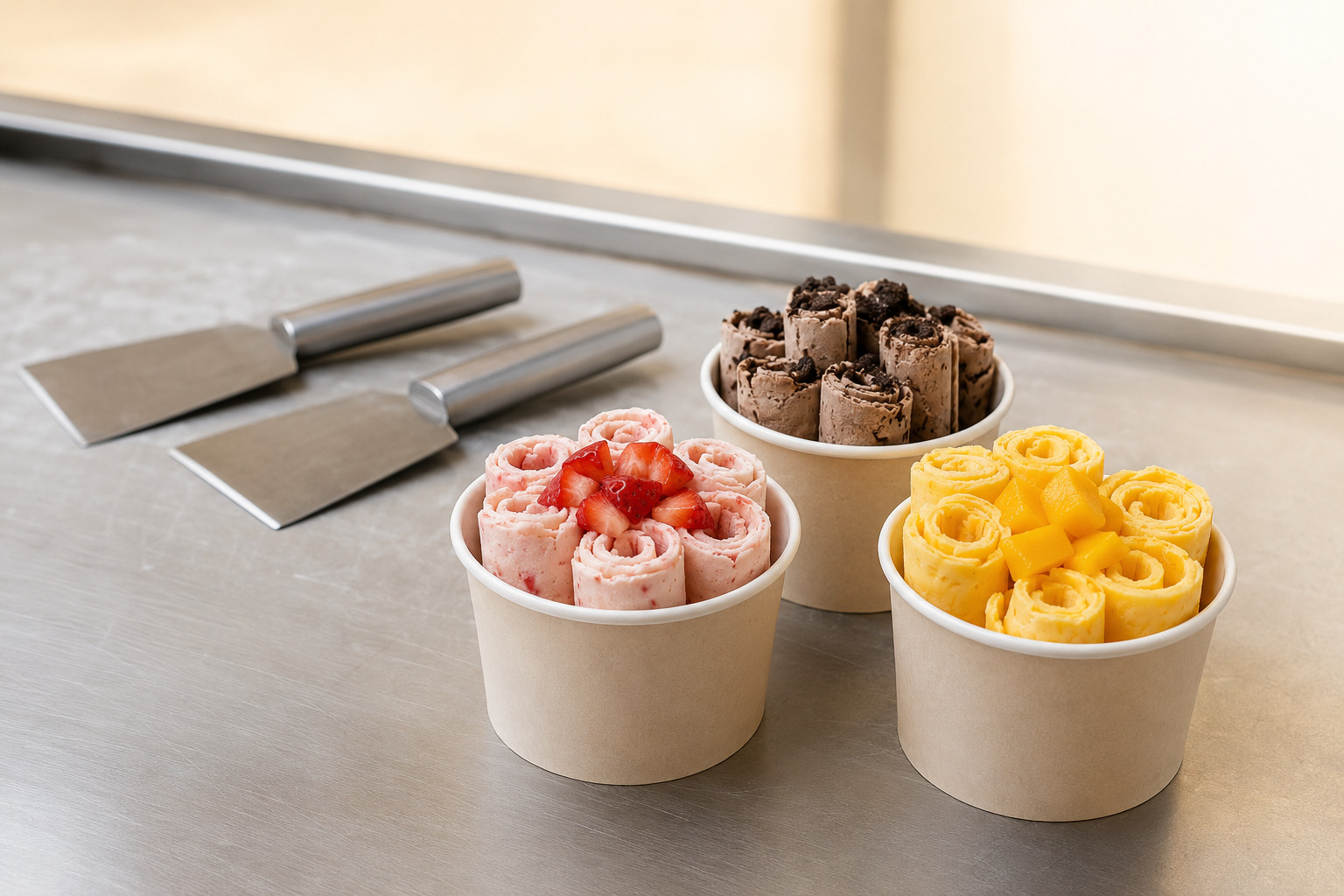
THE 20-SECOND ANSWER
Rolled ice cream is a frozen dessert made by pouring a liquid base onto a very cold metal surface, mixing in flavors or toppings, spreading it into a thin layer, and scraping it into cylindrical rolls. It may also be called Thai rolled ice cream, ice cream rolls, stir-fried ice cream, or roll ice cream. Ingredients and exact methods vary.
CHOOSE A PATH
Get the recipe, tools, freezing method, and rolling technique.
Explore →TASTEFind classic, fruit, chocolate, cookie, dairy-free, and creative variations.
Explore →CHOOSECompare low-cost trays, powered home units, and commercial machines.
Explore →BUILDEstimate equipment needs, startup costs, servings, and operating requirements.
Explore →QUICK VERDICT
A freezer-safe metal tray or sheet pan can work for occasional homemade batches. Powered home units help with repeat batches. Commercial freezing-pan machines are built for continuous service and customer-facing preparation.
Start with a metal pan or passive freezer tray. The tradeoff is limited working time.
Consider a powered freezing tray or specialized home unit after checking capacity and recovery.
Evaluate capacity, voltage, dimensions, serviceability, certifications, and expected daily volume.
THE METHOD
START WITH CLARITY
Each guide answers a distinct question—without stretching one article across the entire topic.
BUYER WARNING
The lowest checkout price can become the highest operating risk when freight, power, cleaning, parts, or seller support are ignored.
Review the Commercial ChecklistFIRST BATCH
Many homemade versions begin with heavy cream and sweetened condensed milk, but ratio, layer thickness, freezing time, and mix-ins decide whether the mixture rolls.
Get the Basic Recipe →BEYOND THE DESSERT
Storefronts, kiosks, trucks, trailers, pop-ups, catering stations, and add-on counters carry different power, permit, labor, and cost requirements.
Explore the Business Guide →OUR METHOD
COMMON QUESTIONS
A liquid base frozen as a thin sheet on a very cold flat surface, then scraped into rolls.
Yes. A deeply chilled freezer-safe metal pan can work for small, occasional batches.
No for occasional home use. Repeat or commercial production changes the equipment decision.
Common causes include an overfrozen or uneven sheet, a warming surface, formula imbalance, or hesitant scraper pressure.
There is no single universal setting. Target plate conditions vary by equipment, formula, room conditions, and manufacturer.
It freezes as a thin layer on a flat cold plate instead of freezing while churning in a barrel.
The range spans a pan you may already own to commercial equipment. Verify dated prices and calculate freight, installation, and support.
Potentially, if the vehicle can support the equipment, power, water, refrigeration, sanitation, ventilation, and local approvals.
At minimum: an approved service model, cold plate, cold holding, prep tools, sanitation system, packaging, power, permits, and trained operators.
YOUR NEXT MOVE